



Mobile Marketing #1

Mobile marketing is a multi-channel, digital marketing strategy that aims to reach the target audience on smartphones, tablets and/or other mobile devices through websites, email, SMS and MMS, social media and apps.
Mobile is increasing how people interact with brands. Anything that can be done on a desktop computer can now be done on a mobile device. From opening an email to visiting your website and reading your content, all of it can be accessed from a small mobile screen.
- 90% of internet users have a smartphone.
- Mobile platforms such as smartphones and tablets host up to 70% of digital media time for users in Turkey.
- Google expected mobile search queries to overtake desktop searches by the end of 2015.
Effective mobile advertising means understanding your mobile audience, designing content with mobile platforms in mind, and ensuring the strategic use of SMS/MMS marketing and mobile apps.
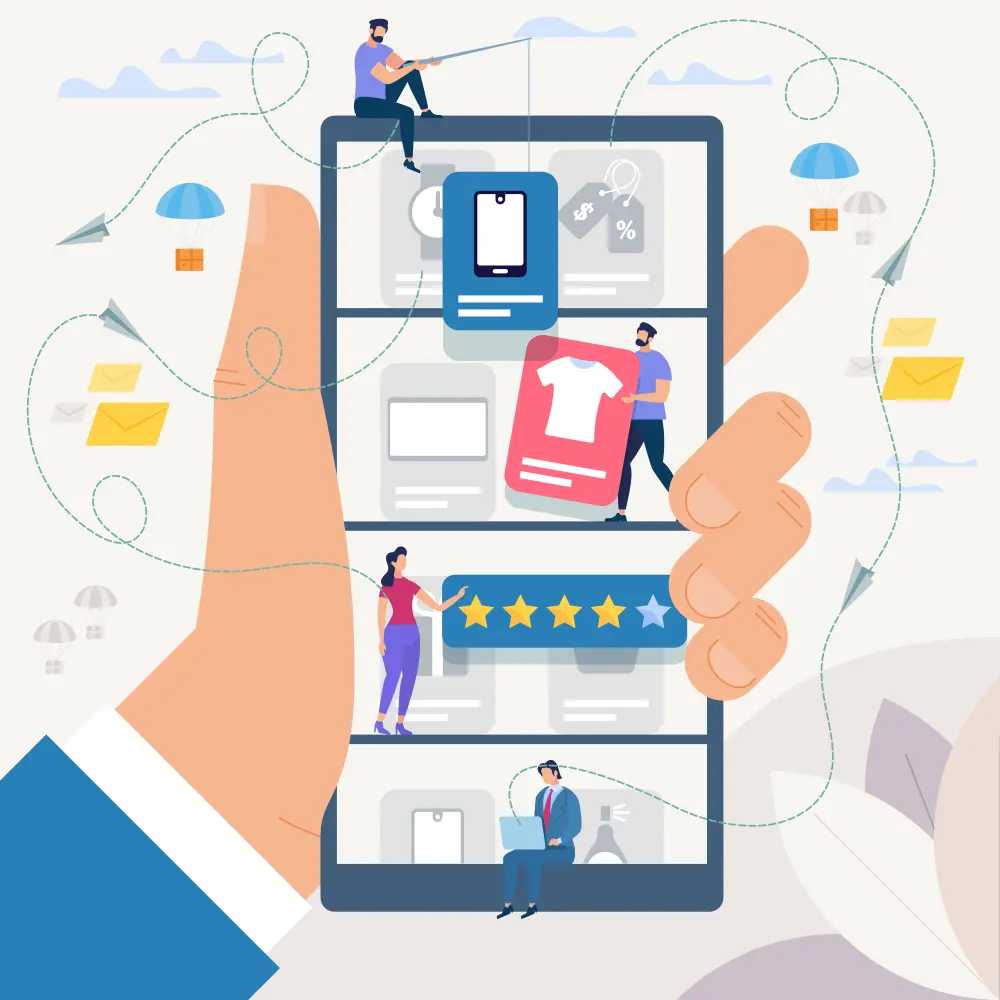
Building a Mobile Marketing Strategy
As with every marketing effort, every brand and organization will develop a unique mobile strategy based on its sector and target audience. Mobile technology is entirely about personalization and customization, and so is mobile marketing.
Step 1: Build a Mobile Target Audience
E-commerce Understanding your audience is the first step of any marketing strategy, and buyer personas are a valuable tool to help with this understanding. The same applies to mobile marketing. Buyer personas are fictional representations of your various types of customers. Create a profile for each one that describes their background, job description, main sources of information, goals, challenges, preferred type of content, objections and/or their role in the buying process. Once you have a clear picture of your target audience, it is easier to determine a channel and tone for your marketing messages.
Also describe your target audience's mobile habits in detail. How much of their web use happens on mobile devices? Are they comfortable completing a purchase from a smartphone? A simple way to start is to research big data reports on mobile use. Some interesting observations include:
- 65% of all emails are first opened on a mobile device.
- 48% of users start their mobile internet sessions with a search engine.
- 56% of B2B buyers frequently use smartphones to access supplier content.
- 95% of adults use their smartphones to access content/information. 95% is not a figure to be dismissed for mobile marketing.
To better understand your target market, track your site's mobile traffic figures in Google Analytics. You can also ask customers and potential customers questions about their mobile web use or run surveys.
A/B testing, which compares two versions of the same campaign on a specific channel, can also be informative for improving any aspect of your audience. When all other factors are the same, do your email campaign landing pages get more views when you send a related email on weekends or on weekdays? In the mornings or in the evenings? Which headline or email subject gets more clicks?
Both general and specific data will help you develop audience personas that include mobile use.

Step 2: Set Goals
The key to defining any effective strategy is first deciding what success looks like. Bring the key stakeholders together to map out your mobile marketing strategy. Set goals by asking your team some of these questions:
- What are we currently doing for mobile devices? This will define your starting point and make sure everyone is on the same page where you are starting.
- If you are already doing mobile marketing, how are these efforts performing? This conversation will identify what works, and even what is not being measured.
- What are your core goals for including mobile marketing in your overall strategy? Discuss why you are thinking about mobile now, how much talk this topic has generated, and what you expect from mobile marketing.
- Who are your key audiences for mobile marketing? Talk about your customer personas in light of mobile usage updates. How similar or different is each person's mobile use?
- How are you engaging your mobile audience across channels? This discussion will help you analyze how the channels you are using can be included in your mobile marketing strategy.

Step 3: Create KPIs
Just like other marketing goals, mobile marketing also needs to be tested and optimized. Determine which realistic, measurable KPIs define the success of your mobile campaign. For example:
- Engagement - Provide mobile-friendly content for potential customers who are looking for information about your industry or product. Make sure your website is mobile-friendly to improve your mobile SEO.
- Trial - Make sure lead nurturing emails are mobile-friendly with clear calls to action. Buttons in emails should be close to the top of the message and large enough to tap easily to make clicks simple. Then make it as easy as possible for someone to fill in a form on your landing page, which is optimized for mobile devices.
- Customer Service - On a connected, social market, customer service is largely a marketing opportunity. For smartphone users, make it easy for customers to reach you through any platform they want, including simple tap-to-call buttons.
To determine the right KPIs for your mobile marketing campaign, ask yourself:
- Do I want to increase conversions from email messages?
- Am I trying to increase traffic to sales pages?
- How important is it for me to generate more qualified leads?
- Does our brand need to improve sales by converting more traffic on specific pages?

Step 4: Review Your Mobile Metrics
Google Analytics can help you monitor your site's mobile use:
- Mobile behavior data shows how well your mobile content engages your audience.
- Mobile conversion data will show whether some of your key landing pages need to be optimized for mobile browsing.
Adding the Device Category field to the Site Content dashboard displays the amount and quality of mobile traffic for each page on your site.
The table in the Site Content dashboard includes metrics such as page views and bounce rate. Click the "Secondary dimension" menu above the first column, select "Device Category" from the "Users" submenu to add it. The table will then show the pages viewed most per device on your site, so you can see how mobile devices really affect your web traffic.
This information can show which search queries can bring mobile traffic to your site, what content your mobile audience is most interested in, and which pages should be optimized for mobile browsing first.
Mobile-Compatible Website - Responsive Website
A mobile-compatible website is no longer an option, it is a necessity. The increase in mobile traffic, combined with Google's mobile-friendliness ranking factor, means that a brand's site must adapt to mobile devices in order to stay competitive. For search engines, "mobile usability" means:
- Content fits on the screen without horizontal scrolling or zooming.
- Content loads quickly.
- Text is readable.
The site does not return errors specific to mobile devices. Google has even provided a free mobile-friendly test tool to help marketers determine how best to improve their sites.
The most important reason for maintaining a mobile-friendly site is to create a consistent and engaging user experience. Mobile UX has a dramatic impact at every stage of the purchase cycle:
- 64% of mobile web users leave pages that do not load within 5 seconds.
- 35% of executives could not complete an intended purchase because the e-commerce site they visited was not mobile-friendly.
- 90% of the C-suite use mobile devices to research business purchases.
Ensuring that the mobile user experience is as easy and smooth as possible should be the primary marketing goal.
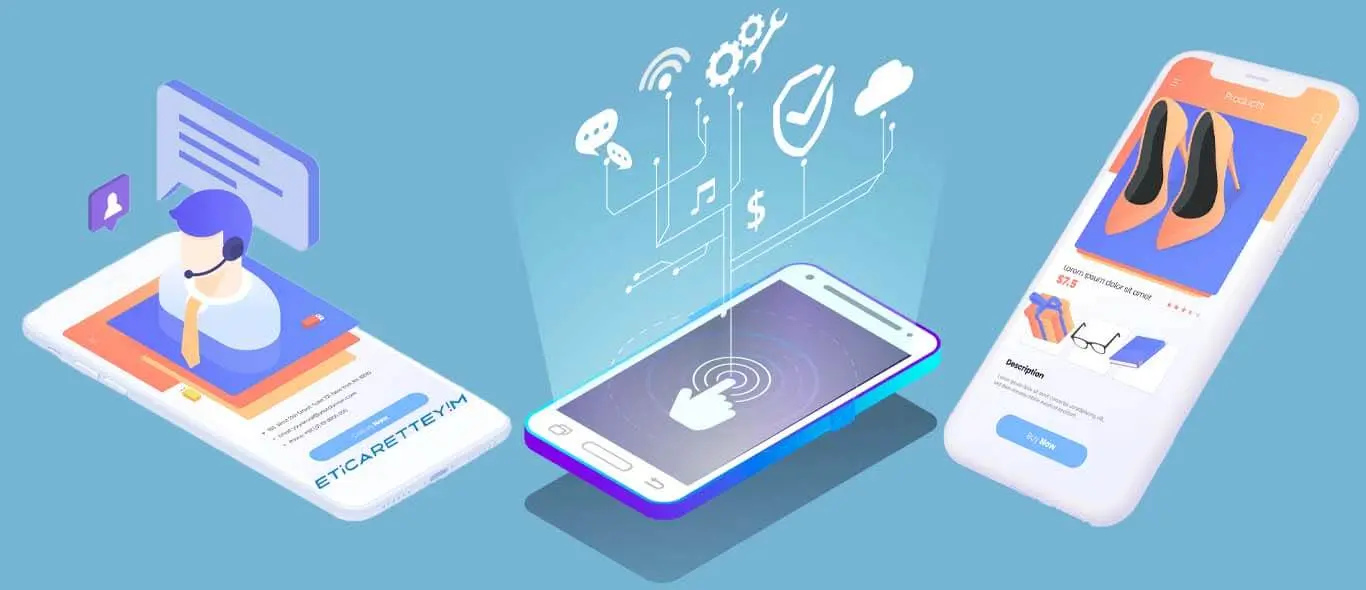
Mobile Marketing for Email - Mobile Advertising
It is clear that your audience engages with email campaigns on mobile devices, since 57% of emails are opened on mobile platforms and 69% of mobile users delete emails that are not optimized for mobile devices.
Most email marketing providers will use responsive design, a strategy that automatically formats web page content for best display on any device, but there are still some important points to consider when designing email CTAs with mobile users in mind:
- Place the CTA at the beginning of the message (near the top of the screen whenever possible).
- Make buttons at least 44x44 pixels so they are easy to "tap".
- CTA: Call To Action, a marketing term widely used in advertising and sales. It refers to any element designed to prompt an immediate response or encourage an immediate sale.
Email sends should be optimized for what is displayed in the mobile inbox - "Sender" fields a maximum of 23 characters and subject lines 38 characters.
Finally, do not forget these landing pages. If your email is mobile-friendly but the click leads to a landing page that is not optimized for mobile devices, this visitor will most likely be disappointed and return from the page.
Creating a unique landing page for an email campaign is a great way to optimize for the mobile user. A unique landing page also allows you to create a set of metrics that will help you track the mobile success of the campaign. Keep these points in mind when designing this unique, mobile-friendly landing page:
- Remember that readers use their fingers to select items. Use prominent image buttons and keep the layout simple.
- Keep forms to a minimum. Less space is better.
- Make sure your images can be resized for different devices. You can code them to be responsive.
- Verify that the page looks as good vertically as it does horizontally.
Not sure where to start with your landing page? Contact us and we will send you ready-made drafts for inspiration.
SMS and MMS Marketing
SMS, also known as the "short message service", really shows how personal mobile marketing can be, because you are sending a message directly to a customer or a potential customer's personal device.
SMS and MMS are very powerful channels for mobile marketing. More than 3.6 billion people can receive SMS messages, and 90% of these messages are opened within three minutes (compared with 90 minutes for the average email). Consider:
- The SMS open rate is 98%, compared with 22% for email.
- Text messages can be up to 8 times more effective at influencing customers.
- Almost 50% of consumers in Turkey shop directly after receiving a brand-related text message.
E-commerce It is important to remember that marketing directly to mobile devices is more personal than targeting an audience through other channels. When you reach someone by email, SMS or MMS on a mobile device, you reach that person in their pocket or bag. Be personal, respectful and clear:
- Keep the text under 160 characters.
- Do not use slang or abbreviations.
- Offer the recipient something of value.
- Make clear who is sending the message.
- Create a clear call to action.
A similar way to reach your mobile audience is MMS, or Multimedia Messaging Service. The difference is that MMS is a multimedia message that can be sent peer-to-peer to a mobile phone from a mobile messaging service provider or from a website. MMS messages can include text,
photos, video, audio or GIFs.
Why should you use MMS marketing to reach your mobile audience?
- MMS texts have higher customer engagement, with an average CTR (click-through rate) of 15%.
- MMS increases campaign preference by 20% over SMS.
- Subscribers are eight times more likely to share MMS content on social networks.
Because MMS offers a richer media experience than simple SMS messages, you should make the best use of these extra media options:
- Add eye-catching visuals.
- Link the MMS send to a multi-channel marketing campaign.
- Make the message easy to share with social media buttons.
It is important to consider privacy regulations in SMS and MMS marketing. Because these messages are treated as automatic calls, they fall under the Telephone Consumer Protection Act (TCPA) of 1991. This means there are three privacy principles that you must manage when applying SMS and MMS to your marketing:
- Adequate notice - You must inform consumers that they will receive SMS messages from a specific short-code-based program.
- Opt-in consent - You must obtain consent to participate before sending marketing SMS and MMS messages. Online forms require double opt-in to enter your SMS or MMS program.
- Opt-out - It must be very clear how someone can unsubscribe from your program.
SMS and MMS are very personal and therefore very powerful mobile marketing options. Make sure you handle them with subtlety and a detailed strategy.
Adding a Mobile App to Your E-Commerce Marketing Strategy
Mobile apps can support many business goals, including expanding your product, increasing engagement and even supporting e-commerce. To maximize the marketing impact of an app, you will want to be involved in the whole process, from app development to app launch. As with all other marketing channels, it is important to think about how the app can be used for purchasing. Just as you would use the content on your website for the same purpose in exchange for a user's contact details, you can offer extra features or more mobile content. You also want to make sure the app encourages user interaction to build relationships and loyalty, and of course drives conversions.
These conversations are guided by two types of messages: push notifications and in-app messages. Both communicate directly with your audience, so both should be considered strategic marketing channels.

Push Notifications
In mobile marketing, push notifications are messages or alerts sent to the user by your app. These messages appear on the home screen of the user's mobile device, regardless of whether the user is interacting with the app or whether it is open. For a push notification to work, the user must have downloaded your app in advance and agreed to allow push notifications. Fortunately, 70% of mobile users allow push notifications.
Examples of push notifications:
- Reminders
- Promotional messages
- Calls to action for specific events or goals
- Highly personalized messages based on user profiles
In-App Notifications
In-app communication directs your users' attention to specific actions, messages and features in the app, and gives you opportunities to interact with your users. These messages give you the chance to be more personal and creative than SMS or push notifications, because the user is already in your app and you are not limited by space constraints or message volume problems.
Three ways to benefit from in-app notifications are:
- Introduce new app features to your users.
- Send messages to increase interaction with specific pieces of content.
- Increase conversions by providing targeted CTAs at specific engagement levels.
Both push and in-app notifications can be powerful ways to reach your audience, especially because people take the time to interact with your brand by downloading your app.

In Short, What Is Mobile Marketing?
Mobile marketing strategy is not a single effort on its own, but it is a large part of long-term or short-term marketing campaigns, and its importance is only growing. From email to PPC, from SEO to content, to social media marketing, there is a mobile marketing channel to reach your audience where they feel most comfortable.
Optimizing your e-commerce site and email messages for mobile devices, making use of the SMS and MMS channels, and creating a native app for your most engaged audience are major projects. For this reason, start by updating your buyer personas to get a better idea of where most of your target audience spends its mobile time. This will give you your starting line, and the rest will fall into a logical order.
Mobile technology is not a passing fad that will disappear soon. Optimizing your marketing strategy for mobile devices will give your brand a competitive advantage. Don't wait, go mobile today.
eticaretteyim Yönetici
We create easy-to-follow guides for store owners on e-commerce, hosting and business email.
Was this post helpful?
Comments
No comments yet. Be the first to comment.
Leave a comment
Comments are published after approval. Your email address is never shown on the site.
Related posts

E-commerce Sales Boosting Tips
Selling online has become very important today. Many people, business owners and entrepreneurs want to bring their products to customers onl...

What Is Corporate Email, and How Do You Get One?
Email, short for electronic mail, is the process of sending and receiving written messages over the internet. Users can send text, images, v...

Why Your Business Needs an E-commerce Website
Why do you need an e-commerce website? Discover how an online store can grow your sales, reach customers around the world and strengthen you...

Things to Know Before Starting E-commerce
Before you open an online store, you need to plan your target audience, products, marketplaces, payments, logistics, competition and legal r...